

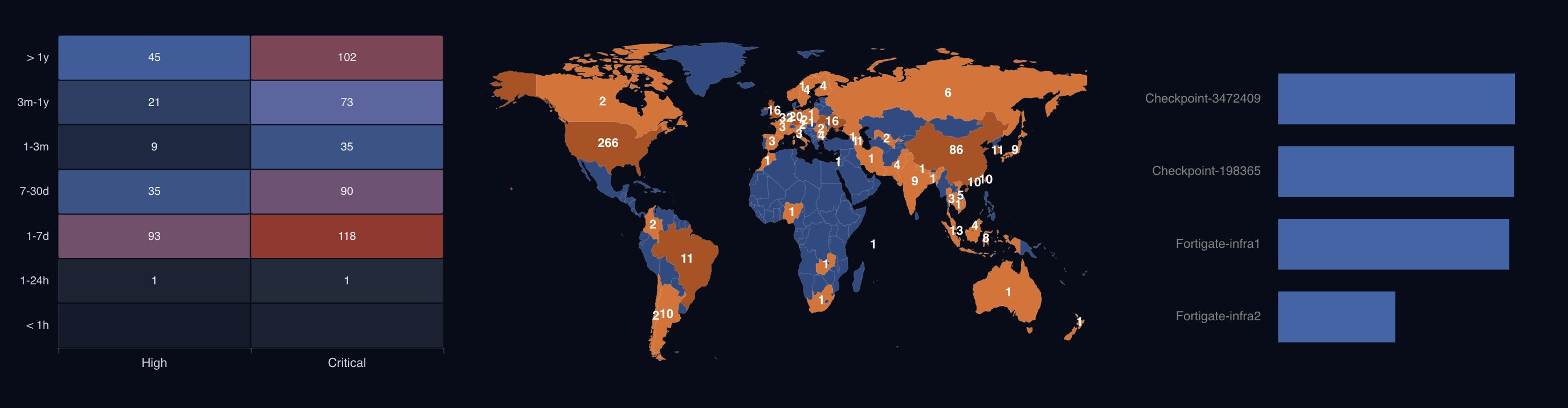
Reading the age buckets
Counts rise from the newest bucket to a peak in 1–7 days, then fall through the older buckets. Two points:
- The 1–7 day bucket has the most events in both columns. Most current High and Critical activity comes from recent sources, not from old entries on a static list.
- The over-a-year bucket is not small. 102 Critical events come from sources first seen more than twelve months ago. Their scores never fully decayed because they kept producing validated activity.
Why age matters alongside severity
A Critical score states how confident the system is that a source is malicious now. Age adds a second dimension: whether the source just appeared or has repeatedly gone through decay and been re-triggered. A 1–7 day Critical indicator and a >1 year Critical indicator are blocked the same way, but they describe different behavior: a new campaign versus a persistent source that never went quiet.The origin map and device breakdown alongside it
The map (center) and bar chart (right) repeat the origin and enforcement-point breakdowns from elsewhere in this report. The US region has the highest count (266). Blocked volume is split across the same four devices: Checkpoint-3472409, Checkpoint-198365, Fortigate-infra1, Fortigate-infra2. They are context for the age data, not a separate finding.A Proof of Value produces this age-versus-severity breakdown from your own traffic.